
/2021/09/steve-mcqueen.jpg)
/2012/09/Paul-Newman-1.jpg)
/2013/03/GettyImages-160099191.jpg)
/2020/08/robert-redford-1.jpg)
/2010/01/Patrick-Dempsey.jpg)
/2020/06/taylor.png)
/2020/02/Angelina-Jolie.png)
/2018/03/GettyImages-821622848.jpg)
/2019/10/denzel-washington-1.jpg)
/2020/01/lopez3.jpg)
/2019/11/GettyImages-1094653148.jpg)
/2009/09/Cristiano-Ronaldo.jpg)
/2009/11/George-Clooney.jpg)
/2009/09/Brad-Pitt.jpg)
/2020/04/Megan-Fox.jpg)
:strip_exif()/2015/09/GettyImages-476575299.jpg)
/2017/02/GettyImages-528215436.jpg)
What was Steve McQueen's Net Worth?
Steve McQueen was an American actor and cultural figure in the 1960s and 1970s. At the time of his death, Steve McQueen's net worth was $30 million. That's the same as $100 million in today's dollars. Steve was known for his roles in films like "The Thomas Crown Affair," "The Great Escape," and "The Sand Pebbles," among many others.
In the mid-1970s, Steve McQueen was the highest-paid actor in the world. His $12 million paycheck for 1974's "The Towering Inferno" is worth the same as $76 million today. He also owned a valuable collection of cars, motorcycles, and watches. Steve McQueen-owned cars, watches, and motorcycles today are extremely valuable.
Known for portraying antiheroes and outsiders, McQueen brought a unique mix of toughness and vulnerability to films like "Bullitt," "The Great Escape," "The Cincinnati Kid," and "Papillon." Unlike many of his contemporaries, he cultivated a minimalist acting style, often saying more through silence and physicality than dialogue, which helped redefine what a leading man could be. Offscreen, he was equally compelling, a skilled race car and motorcycle enthusiast who performed many of his own driving stunts and lived a life that closely mirrored his onscreen image. At the height of his career, McQueen was one of the highest-paid actors in Hollywood, commanding multi-million-dollar salaries and maintaining significant creative control over his projects. His legacy endures not only through his films but also through his influence on generations of actors who have drawn inspiration from his cool, restrained approach to performance.
Early Life
Steve McQueen was born Terrence Stephen McQueen on March 24, 1930, in Indianapolis, Indiana. His father, a stunt pilot, left the family when McQueen was an infant, and his early childhood was marked by instability. He spent several years living with relatives in Missouri before eventually rejoining his mother, who struggled with alcoholism and frequently moved the family between Indianapolis and Los Angeles.
As a teenager, McQueen developed a rebellious streak and began getting into trouble, engaging in petty theft and skipping school. At the age of 13, his mother sent him to the California Junior Boys Republic in Chino, a reform school for troubled youth. Although he initially resisted the discipline, the experience ultimately had a lasting positive impact. McQueen later credited the institution with helping him develop a sense of structure and purpose, and he remained connected to it throughout his life, even funding scholarships for other at-risk youths.
After leaving the Boys Republic, McQueen drifted through a series of jobs, including working as a lumberjack, oil rigger, and carnival barker. He later enlisted in the United States Marine Corps, where he served for three years. His time in the military was turbulent, marked by disciplinary issues and multiple demotions, but he also gained valuable skills, including mechanical training that would later support his passion for racing.
Entry Into Acting
After his discharge from the Marines in 1950, McQueen moved to New York City and struggled to make ends meet. He took on odd jobs such as bartending, selling encyclopedias, and repairing televisions while searching for direction in life.
His path changed when a friend suggested he try acting. McQueen enrolled in acting classes at the Neighborhood Playhouse and later studied under Uta Hagen and at the Actors Studio. His early stage work included minor roles, including a one-line performance in a Yiddish-language production, but he gradually developed his craft through perseverance.
His first major break came in 1956 when he replaced Ben Gazzara in the Broadway production of "A Hatful of Rain." The role brought him attention and opened doors in both television and film. Shortly afterward, he landed the lead role in the television series "Wanted Dead or Alive," which aired from 1958 to 1961. As bounty hunter Josh Randall, McQueen became a household name, establishing the cool, laconic persona that would define his career.
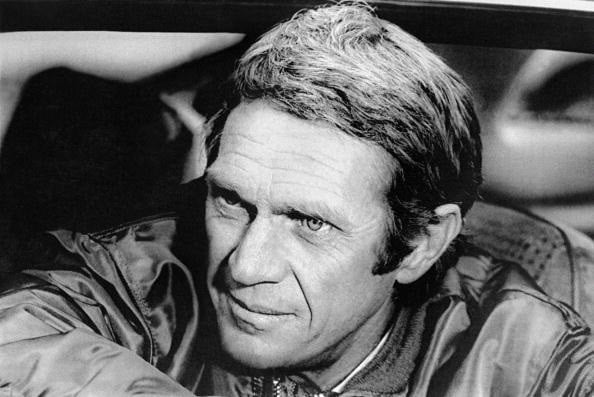
AFP/Getty Images
Rise to Film Stardom
McQueen transitioned into film during the late 1950s and early 1960s, gradually building a reputation as a compelling screen presence. His breakthrough came with "The Great Escape" in 1963, where his portrayal of a rebellious American prisoner of war and his now-legendary motorcycle chase cemented his status as a rising star.
He followed this success with a string of notable performances in films such as "Love with the Proper Stranger," "The Cincinnati Kid," and "The Sand Pebbles," the latter earning him an Academy Award nomination for Best Actor. McQueen's ability to portray flawed, introspective characters set him apart from more conventional leading men.
By the late 1960s, he had become one of Hollywood's most bankable stars. His role in "The Thomas Crown Affair" showcased his sophistication and style, while "Bullitt" became one of his most iconic films, particularly for its groundbreaking car chase through the streets of San Francisco, which he helped design and partially perform himself.
Peak Career and Major Films
During the late 1960s and early 1970s, McQueen reached the peak of his fame and earning power. He was widely regarded as the top box office draw in the world, commanding salaries that exceeded $1 million per film and later rising to more than $3 million.
His filmography during this period included a mix of commercial hits and more personal projects. "Le Mans" and "On Any Sunday" reflected his deep passion for motorsports, while "Junior Bonner" explored themes of aging and identity. In 1973, he starred in "Papillon," a powerful drama about imprisonment and escape that remains one of his most acclaimed performances.
He also appeared in the blockbuster "The Towering Inferno" in 1974, sharing top billing with Paul Newman. The film was a major commercial success and further solidified his status as a leading man capable of carrying large-scale productions.
World's Highest Paid Actor
In the late 1960s, Steve was one of the highest-paid actors in the world, earning $1 million per movie. His salary soon jumped to $3 million per movie. For 1974's "The Towering Inferno," Steve was paid a salary of $12 million. After adjusting for inflation, that's the same as an astonishing $76 million. This paycheck made Steve the highest-paid actor in the world by a mile. A title he held for many years, even after his death in 1980.
Racing Passion and Personal Interests
Outside of acting, McQueen was an accomplished race car driver and motorcycle enthusiast. He competed in numerous professional events, including the 12 Hours of Sebring, where he finished second overall despite driving with a broken foot.
Racing was more than a hobby for McQueen; it was a central part of his identity. He often insisted on performing his own driving stunts and worked closely with filmmakers to ensure authenticity in racing scenes. His film "Le Mans" was a direct expression of this passion, focusing more on the experience of racing than traditional narrative structure.
McQueen's love of machinery extended beyond racing, as he was known for collecting cars, motorcycles, and firearms. He maintained a hands-on approach to his hobbies, frequently working on his vehicles himself.
Later Career and Final Films
In the late 1970s, McQueen began to step away from the spotlight, appearing in fewer films as he grew more selective about his roles. He took on a rare stage adaptation in "An Enemy of the People," demonstrating a willingness to pursue more serious, non-commercial material.
His final films included "Tom Horn" and "The Hunter," both released in 1980. These roles reflected his enduring interest in portraying rugged, independent characters, even as his health began to decline.
Personal Life
McQueen's personal life was as complex as his screen persona. He was married three times, first to actress Neile Adams, with whom he had two children, Chad and Terry. The marriage lasted 15 years before ending in divorce in 1971. Chad McQueen's son, Steven R. McQueen, also became an actor.
He later married actress Ali MacGraw in 1973 after the two met during the filming of "The Getaway." Their relationship was highly publicized but ultimately ended in divorce in 1978. In 1980, he married model Barbara Minty, who remained with him until his death.
Known for being intensely private, McQueen often avoided interviews and resisted attempts to analyze or define him. He was described by friends and colleagues as both fiercely independent and deeply loyal. Despite his wealth and fame, he maintained a guarded demeanor and preferred a relatively simple lifestyle centered around his interests.
He also gave back in personal ways, including supporting the Boys Republic, the institution that had helped him as a troubled youth.
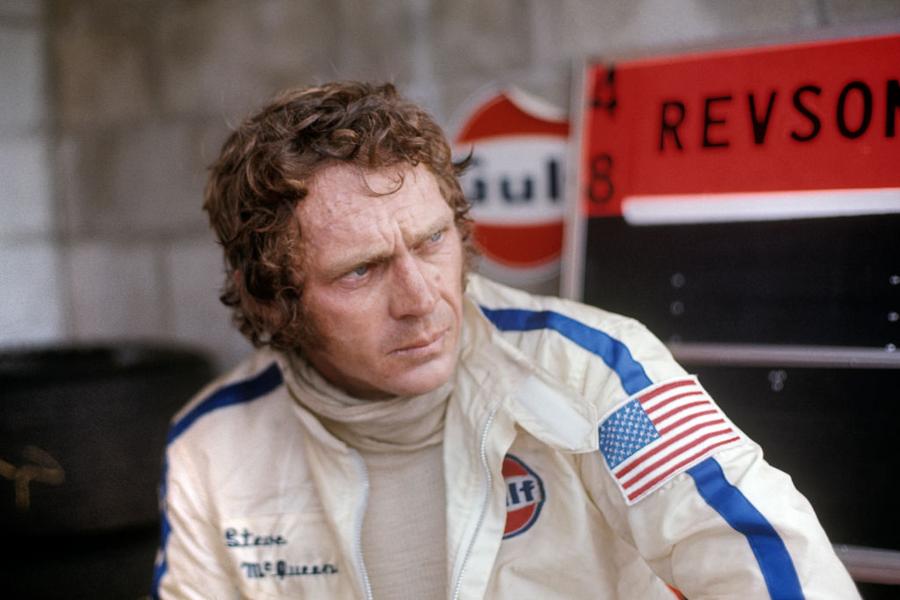
(Photo by Bernard Cahier/Getty Images)
Real Estate
In 1979, Steve and Barbara Minty bought a 15.5-acre ranch in Santa Paula, California, roughly 1.5 hours northeast of Los Angeles. They married at this ranch in the home's living room in 1980. The property features a 4,500-square-foot hangar where Steve housed his car and motorcycle collection. Another benefit for Steve was the property's close proximity to the Santa Paula Airport, where he housed his Stearman Model 75 biplane.
Car Collection
Years after his death, Steve's car and motorcycle collection would prove to be extremely valuable. He owned approximately 130 motorcycles and dozens of incredible cars, from Ferraris to Porsches and Jaguars.
In 2006, his 1937 Crocker motorcycle sold for $276,000.
In 2007, his 1963 Ferrari 250 GT Lusso Berlinetta sold for $2.3 million.
Watches
Steve owned dozens of watches and, during his lifetime, was a brand ambassador for Heuer. Tag Heuer still pays Steve's estate to this day to use his image in their advertisements. One of the six Monaco Ref. 1133 watches that he wore in the 1970 movie "Le Mans" was sold at auction for $2.208 million.
Death
In 1978, McQueen developed a cough, which led him to give up smoking. However, the cough persisted, and he eventually discovered he had pleural mesothelioma, a type of cancer that is attributed to asbestos exposure, for which there is no known cure.
After evidence of widespread metastasis was found, McQueen sought controversial treatments in Mexico that ultimately did nothing to cure him. He developed a number of tumors in his abdomen and flew to Mexico to have one on his liver removed, despite American doctors telling him they were inoperable. Shortly following the surgery, McQueen died of a heart attack in November 1980 while still in Mexico.
McQueen was cremated, and his ashes were scattered over the Pacific Ocean. Since his death, McQueen has remained an icon and has been inducted into the Hall of Great Western Performers and the Motorcycle Hall of Fame. He has also been featured in a number of museum exhibits, had documentaries made on his life, and has been portrayed in feature films.
/2021/09/steve-mcqueen.jpg)
/2012/09/Paul-Newman-1.jpg)
/2015/06/sm.jpg)
/2017/09/Porsche-917.jpg)
/2020/01/GettyImages-611732374.jpg)
/2014/07/Chad-McQueen.jpg)
/2020/08/robert-redford-1.jpg)
/2009/11/Pierce-Brosnan.jpg)
:strip_exif()/2009/09/P-Diddy.jpg)
/2009/09/Jennifer-Aniston.jpg)